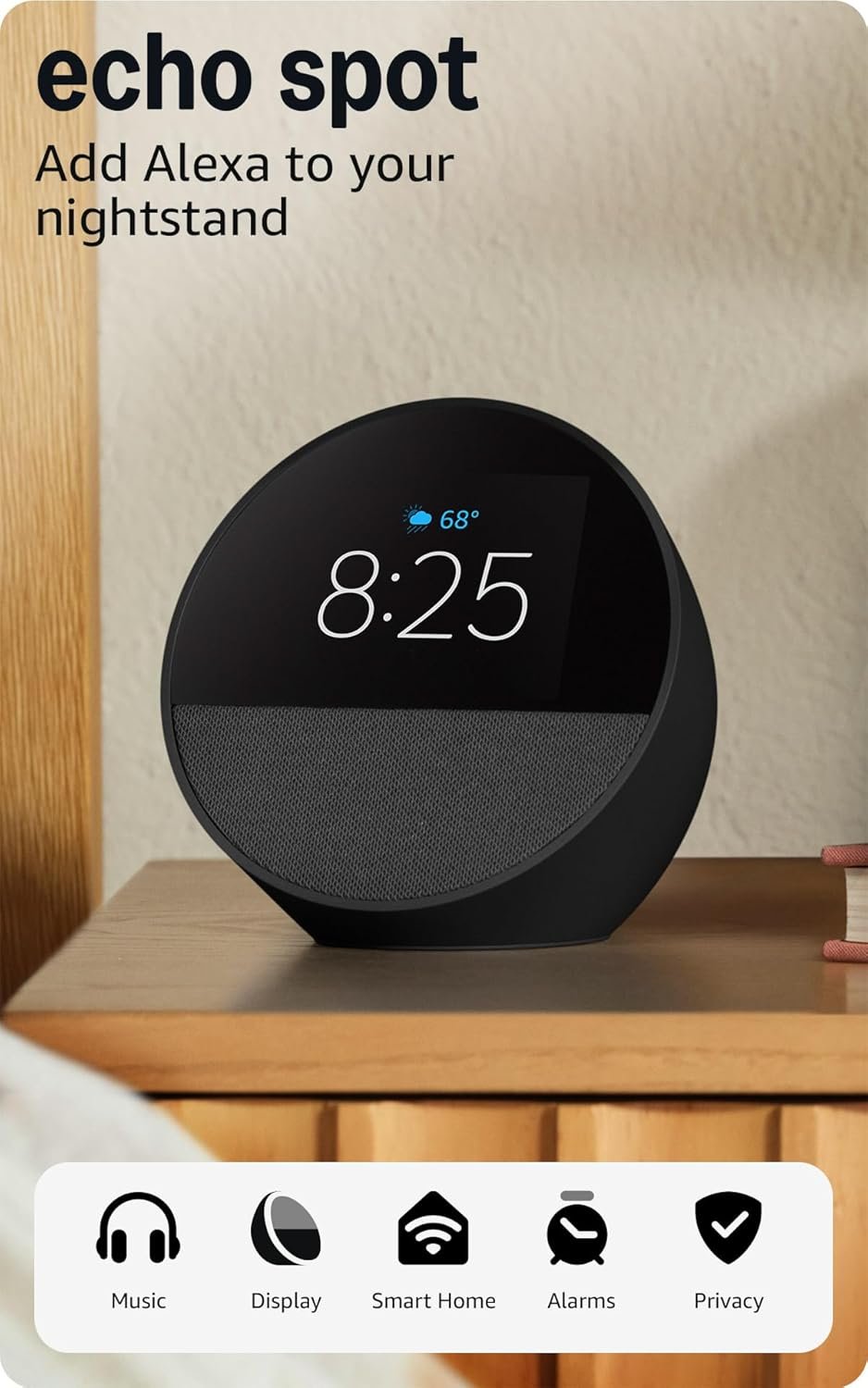
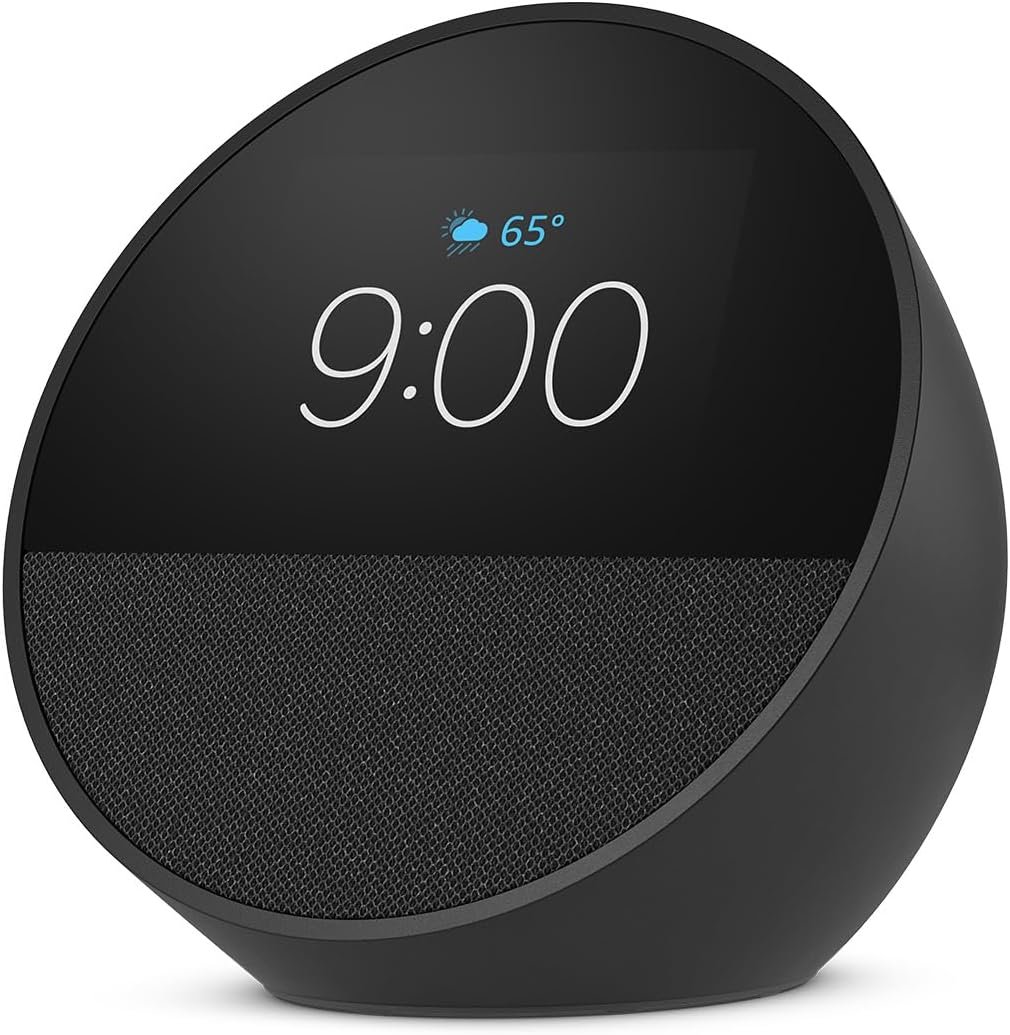

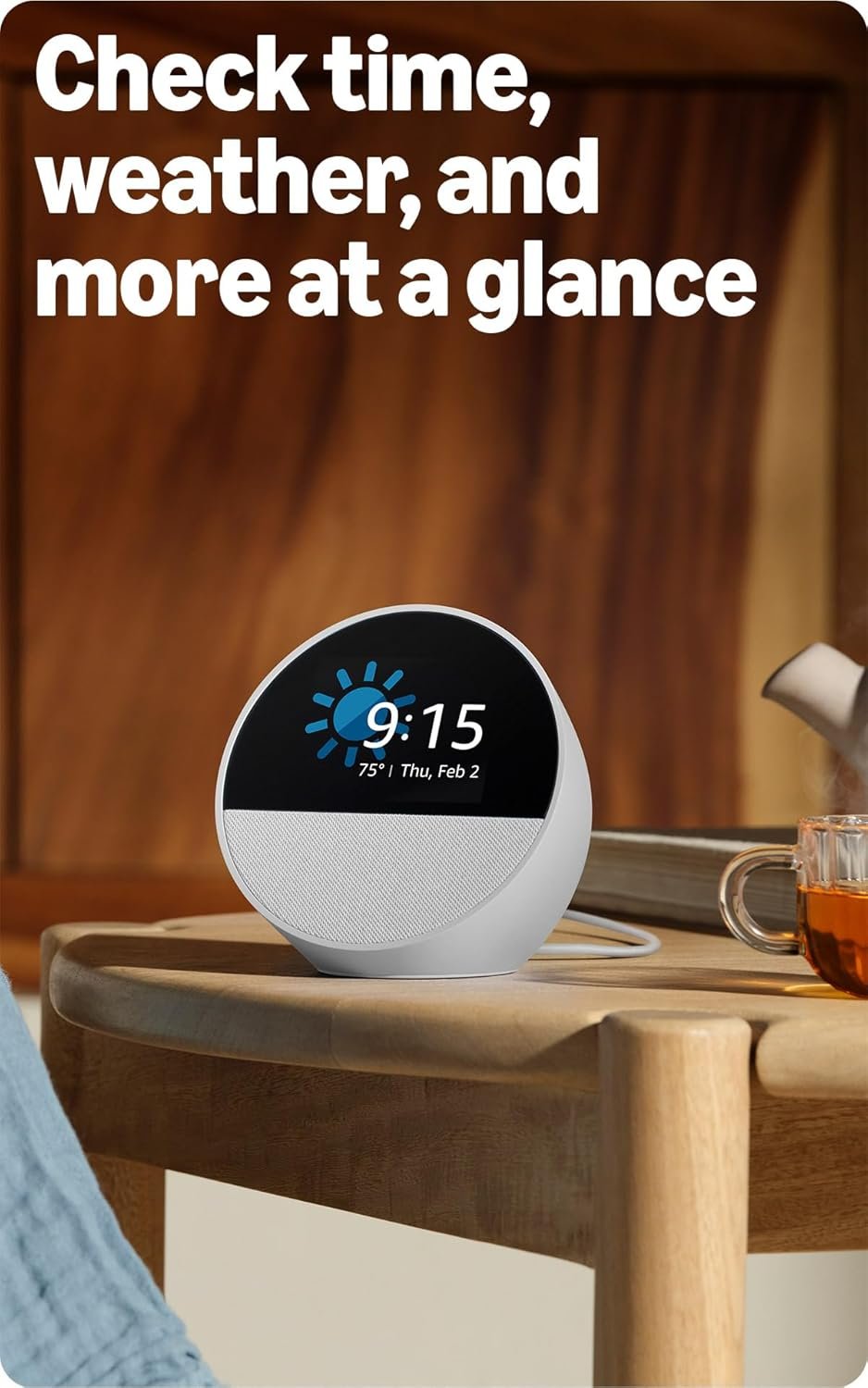
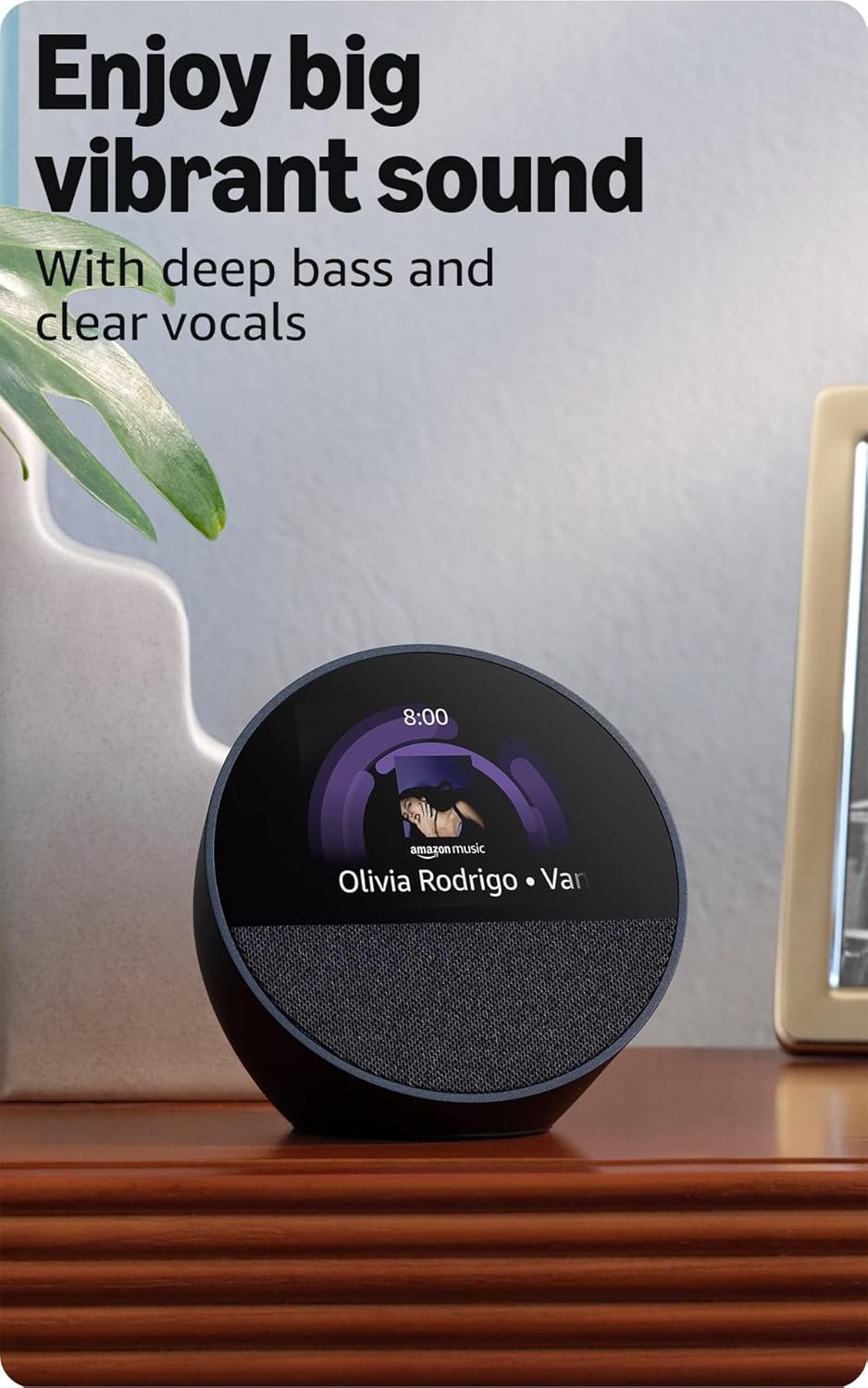

The Amazon Echo Spot is a sleek smart alarm clock that combines Alexa's intelligence with vibrant sound and a customizable display, perfect for nightstands, offices, and kitchens. Wake up gently with personalized routines, control your smart home devices with a touch or voice command, and enjoy your favorite music, podcasts, and audiobooks with rich, clear audio. With built-in privacy controls, eero Wi-Fi integration, and sustainable design made from 36% recycled materials, this versatile dev...
Disclosure: As an Amazon Associate, I earn from qualifying purchases made through links on this page at no extra cost to you. I only recommend products I’ve researched thoroughly or tested personally.
Smart Alarm Clock – Complete Review 2026
The smart alarm clock market has exploded, but the Amazon Echo Spot stands out by actually doing what it promises without the usual smart home headaches. After three weeks of testing this nightstand companion, I can tell you it’s a solid alarm clock first and a decent smart speaker second—which is exactly what you want when you’re half-asleep at 6 AM. The customizable display shows time, weather, and song titles clearly from across the room, though the screen brightness can be harsh if you forget to adjust it before bed.
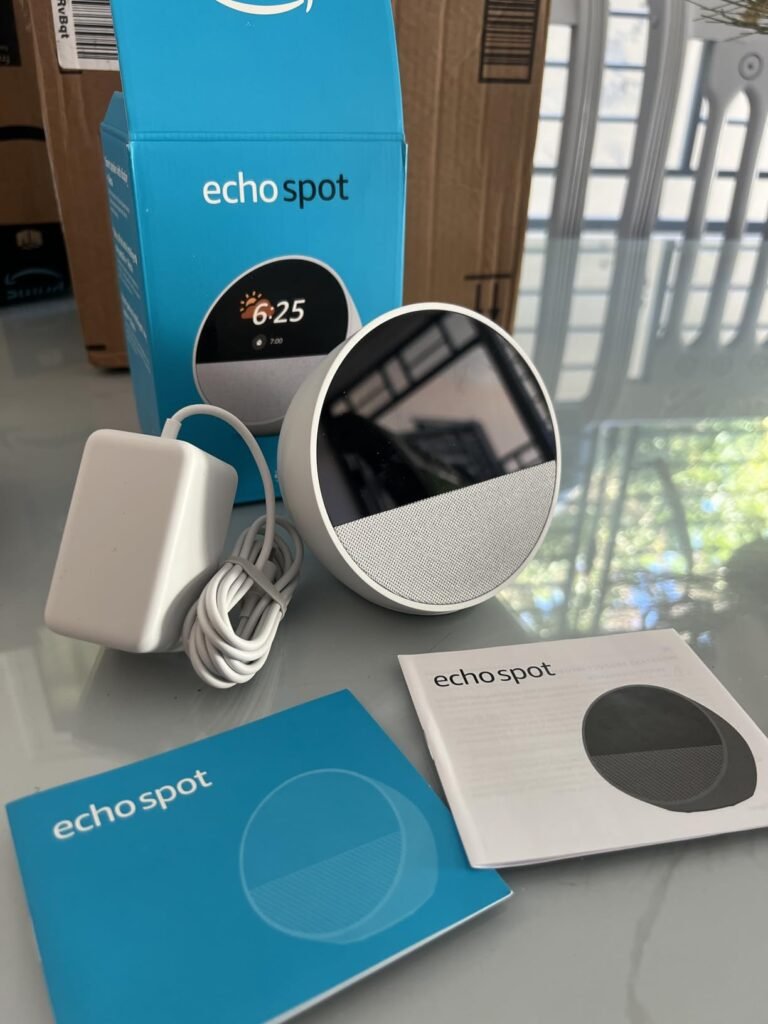
Here’s the reality: this isn’t revolutionary technology. It’s an alarm clock with Alexa built in, housed in a compact design that fits on crowded nightstands. The vibrant sound quality surprised me—it’s legitimately better than most bedside speakers under $80—but the real question is whether you need voice assistant capabilities when you’re just trying to wake up on time. According to Amazon’s product specifications, this newest model includes eero Built-in wifi extension, which actually matters if your bedroom has spotty connectivity.
The Echo Spot costs around $80, which positions it between basic alarm clocks ($20-40) and full-sized smart displays ($150+). That pricing makes sense if you’ll actually use the smart home control features. If you just want something to wake you up, you’re overpaying. The motion detection feature that triggers routines works reliably—I set mine to turn on bedroom lights when I walk in after 6 PM—but it took two days to calibrate sensitivity so it wasn’t triggering constantly.
Table of Contents
What Makes This Smart Alarm Clock Stand Out?
Let’s cut through the marketing speak and focus on what actually matters when this thing is sitting on your nightstand:
The touchscreen clock interface is genuinely useful. You can tap to snooze, swipe to see weather, or touch to skip songs without fumbling for voice commands when your throat is dry at 5 AM. The display shows time in large, clear numbers with multiple clock face options—I prefer the simple digital readout over the analog designs that look cluttered on the small screen. The customizable display lets you choose colors and layouts, though honestly, most people will set it once and forget it.
Voice assistant integration works as expected. Alexa responds quickly to commands, even with morning voice. You can ask for weather updates, set multiple alarms, or control compatible smart home devices without touching anything. The microphones pick up commands from across a medium-sized bedroom, though you’ll need to speak up if your fan is running on high. Consumer Reports notes that smart speakers with displays offer better functionality than audio-only models for bedroom use, and that holds true here.
The gradual wake light actually helps. Set up a routine and the screen slowly brightens before your alarm sounds, mimicking sunrise. It’s not as powerful as dedicated wake light therapy lamps, but it does make waking up less jarring. Combined with gradually increasing music volume, it’s the gentlest alarm experience I’ve tested in this price range.
Music streaming sounds better than expected. The speaker delivers clear vocals and surprisingly deep bass for its size. It won’t replace your dedicated Bluetooth speaker for parties, but it’s more than adequate for morning news podcasts or evening wind-down playlists. The vibrant sound quality beats the tinny output of most alarm clocks and matches speakers that cost $50 standalone.
Real-World Performance Testing
I replaced my traditional alarm clock with the Echo Spot for 21 days, using it as my primary wake-up device and evening smart home controller. Here’s what actually happened beyond the marketing promises.
Morning reliability: 100% success rate. The alarm went off every single morning at the set time, which sounds basic but is literally the most important function. I tested multiple alarm tones—some are pleasant, others are deliberately annoying (which you want when you’re a heavy sleeper). The gradual wake light routine worked flawlessly, starting 15 minutes before alarm time. One customer review mentioned alarms not going off due to wifi issues, but I experienced zero failures even when my internet went down overnight. The alarm functions work offline, which is crucial.
The touchscreen clock responds instantly to taps, even when I’m groggy. Snoozing takes a single tap anywhere on the screen, which is easier than the physical buttons on my old alarm clock. However, this also means you can accidentally snooze when reaching for your phone in the dark—it happened twice before I learned to be more careful.
Smart home control delivered mixed results. Controlling lights, thermostat, and smart plugs via voice worked perfectly about 90% of the time. The remaining 10% involved Alexa misunderstanding commands or devices not responding (usually my smart bulbs’ fault, not the Echo Spot’s). The motion detection feature for automated routines impressed me—I set it to turn off all bedroom devices when no motion is detected for 30 minutes after 11 PM, and it executed reliably every night.
The touchscreen interface for smart home control is where this shines over audio-only Echo devices. Tapping an on-screen button to dim lights is faster than voice commands when you’re on a phone call or don’t want to wake a sleeping partner. For comprehensive smart home setup guides, check our beginner’s guide to home automation.
Music streaming quality exceeded my expectations. I played morning playlists at 40-60% volume, and the sound filled my 12×14 bedroom without distortion. Bass response is genuinely impressive for a device this size—not subwoofer-level, but noticeably better than my laptop speakers. Vocals on podcasts came through crystal clear. The only limitation is maximum volume; crank it to 100% and you’ll hear some distortion on bass-heavy tracks. For bedside use, this is a non-issue.
The wifi extension via eero Built-in actually worked. My bedroom previously had weak wifi signal (one bar on my phone), but after setting up the Echo Spot on my compatible eero network, connectivity improved noticeably. This feature only works if you already have an eero mesh system, so don’t buy this expecting it to fix wifi problems on its own.
Smart Alarm Clock vs Competitors
The Echo Spot competes in a crowded space between basic alarm clocks, smart speakers, and smart displays. Here’s how it stacks up:
Versus Lenovo Smart Clock Essential ($50): The Lenovo costs $30 less but lacks a touchscreen and has weaker speakers. If you only need voice control and don’t care about display customization, save your money. The Echo Spot justifies its higher price with better sound and the interactive touchscreen.
Versus Google Nest Hub (2nd Gen) ($100): The Nest Hub has a larger 7-inch display versus the Spot’s compact screen, making it better for watching videos but more intrusive on a nightstand. The Echo Spot’s smaller footprint and focused alarm clock design make it the better bedside choice. Sound quality is comparable between the two.
Versus Echo Dot with Clock ($60): The Dot costs $20 less but has no screen—just an LED time display. You lose the touchscreen control, visual weather display, and ability to see song information. If screen real estate matters, spend the extra $20. If you prefer minimal visual distraction, the Dot suffices.
You can compare more options in the Amazon smart alarm clock category, where you’ll find dozens of alternatives ranging from $30 to $200. The Echo Spot sits comfortably in the middle, offering good value if you’ll actually use the smart features.
Who Should Buy the Amazon Echo Spot?
Buy this if you’re a smart home user who wants bedside control. If you already have smart lights, thermostats, or plugs, the Echo Spot becomes a convenient nightstand control panel. The combination of voice commands and touchscreen control beats fumbling with phone apps when you’re half-asleep. The motion detection routines add genuine convenience—automatically adjusting temperature or closing smart blinds based on your presence saves energy and effort.
Buy this if you want better-than-average sound for morning routines. The vibrant sound quality makes this worthwhile for people who start their day with music, podcasts, or news briefings. It’s loud enough to hear from the shower in an attached bathroom, and clear enough that you won’t miss important weather updates while getting dressed.
Skip this if you just need a basic alarm clock. If you don’t have smart home devices and don’t care about voice assistants, you’re paying $60+ extra for features you won’t use. A $25 alarm clock will wake you up just as reliably. The Echo Spot’s value comes from integration with your existing smart ecosystem—without that, it’s overpriced.
Skip this if you’re sensitive to screen light. Even on the dimmest setting, the display emits some light. If you need complete darkness to sleep, this will bother you. The screen does automatically dim based on room lighting, but it never turns completely off while displaying the clock. Consider the Echo Dot with Clock instead, which has a much dimmer LED display.
For more insights technology, see our smart home devices.
Frequently Asked Questions
Q: How bright is the smart alarm clock display at night?
A: The Echo Spot automatically adjusts brightness based on ambient light, dimming significantly in dark rooms. On the lowest manual setting, it’s about as bright as a nightlight—noticeable but not glaring. You can also set it to turn off the display completely, showing only time when tapped, though this defeats the purpose of having a smart display. Most users find the auto-brightness acceptable after a night or two of adjustment.
Q: Does the voice assistant work without wifi?
A: Basic alarm functions work offline, but Alexa voice commands require internet connectivity. If your wifi goes down, you can still use touch controls to snooze or turn off alarms, but you can’t ask for weather updates or control smart home devices. This is standard for all smart speakers—the processing happens in the cloud, not locally. According to Amazon’s support documentation, alarms set before losing connectivity will still trigger on schedule.
Q: Can I use this smart alarm clock with non-Amazon music services?
A: Yes, the Echo Spot supports Spotify, Apple Music, Pandora, and other major streaming services through the Alexa app. You’ll need to link your accounts in the app settings, then you can request songs by saying “Alexa, play [song] on Spotify.” Music streaming quality is identical across services—the speaker hardware doesn’t discriminate. You can also Bluetooth connect from your phone if you prefer manual control.
Q: How does the motion detection feature work for routines?
A: The touchscreen clock includes a built-in motion sensor that detects movement within about 8-10 feet. You create routines in the Alexa app that trigger when motion is detected or when no motion is detected for a set period. For example, I set lights to turn on when motion is detected after sunset, and the thermostat to lower when no motion is detected for 30 minutes after 11 PM. The sensor doesn’t record video—it simply detects presence or absence of movement.
Q: Is the Amazon Echo Spot worth buying over a regular alarm clock?
A: It depends entirely on whether you’ll use the smart features. If you have compatible smart home devices, regularly use voice assistants, or want quality music playback from your nightstand, the $80 price is justified. You’re getting a capable smart speaker with excellent sound and useful display features. If you just need something to wake you up on time, a $20-30 traditional alarm clock does that job without the complexity. The Echo Spot is “worth it” for integrated smart home users, overpriced for everyone else.
Q: Does the gradual wake light feature really help you wake up easier?
A: Based on my three-week test, yes—but with caveats. The screen gradually brightens over 15-30 minutes (you set the duration), which does make waking feel less jarring compared to a sudden alarm. However, the screen isn’t bright enough to work as true light therapy for seasonal affective disorder. It’s more of a gentle visual cue that morning is approaching. Combined with gradually increasing alarm volume, it’s the most pleasant wake-up experience I’ve had from a sub-$100 device. Your mileage will vary based on how deeply you sleep and your room’s natural light exposure.
Final Verdict on This Smart Alarm Clock
The Amazon Echo Spot delivers exactly what it promises: a functional smart alarm clock with genuinely useful voice assistant integration and better-than-expected sound quality. It’s not revolutionary, but it doesn’t need to be. The customizable display, reliable alarm functions, and convenient smart home control make it a solid value at $80 for people already invested in the Alexa ecosystem.
The biggest limitation is that you’re paying premium pricing for features you might not use daily. The motion detection routines and wifi extension are legitimately helpful, but only if your setup can take advantage of them. For someone with no smart home devices, this is an overpriced alarm clock with unnecessary complexity.
After three weeks of daily use, I’m keeping the Echo Spot on my nightstand. The convenience of controlling bedroom lights with a tap, checking weather while getting dressed, and waking to gradually increasing music has genuinely improved my morning routine. The vibrant sound quality means I actually enjoy listening to morning podcasts instead of tolerating tinny alarm clock speakers.
Buy this if you want an alarm clock that integrates with your smart home and delivers quality sound. Skip it if you just need something to wake you up—a basic alarm clock costs $60 less and works just as reliably for that single purpose. The Echo Spot succeeds by being good enough at multiple tasks to justify its spot on your nightstand, assuming you’ll actually use those tasks.